
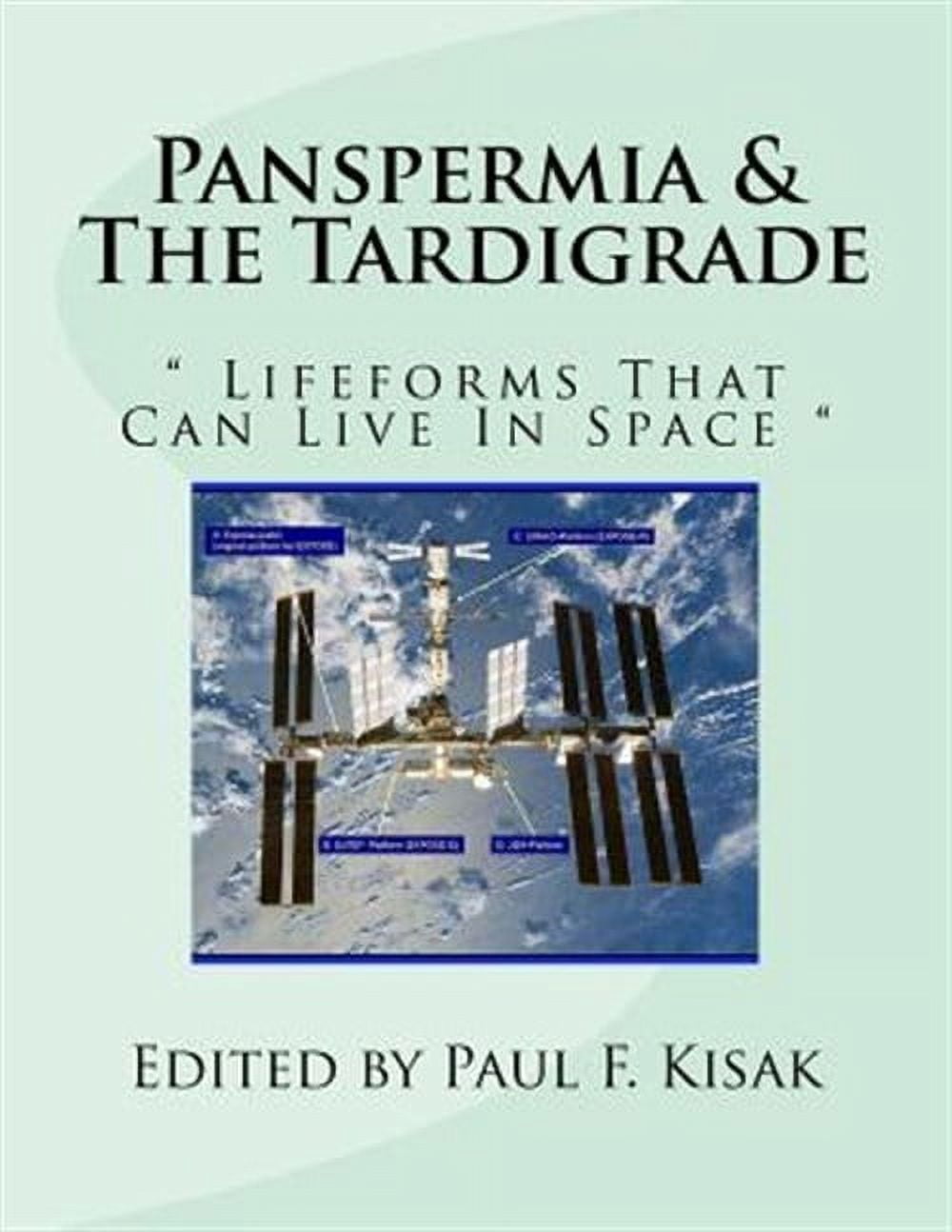
Panspermia & The Tardigrade: " Lifeforms That Can Live In Space " (Paperback) by Paul F Kisak
Product details
| Management number | 239947337 | Release Date | 2026/07/16 | List Price | US$7.98 | Model Number | 239947337 | ||
|---|---|---|---|---|---|---|---|---|---|
| Category | |||||||||
9781519665898. New condition. Trade paperback. Language: English. Pages: 244. Trade paperback (US). Glued binding. 244 p. Panspermia is the hypothesis that life exists throughout the Universe, distributed by meteoroids, asteroids, comets, planetoids and, also, by spacecraft in the form of unintended contamination by microorganisms.Panspermia is a hypothesis proposing that microscopic life forms that can survive the effects of space, such as extremophiles, become trapped in debris that is ejected into space after collisions between planets and small Solar System bodies that harbor life. This book is designed to be a general overview of the topic and provide you with the structured knowledge to familiarize yourself with the topic at the most affordable price possible. The level of discussion is that of Wikipedia. The accuracy and knowledge is of an international viewpoint as the edited articles represent the inputs of many knowledgeable individuals and some of the most currently available general knowledge on the topic based on the date of publication.Some organisms may travel dormant for an extended amount of time before colliding randomly with other planets or intermingling with protoplanetary disks. If met with ideal conditions on a new planet's surfaces, the organisms become active and the process of evolution begins. Panspermia is not meant to address how life began, just the method that may cause its distribution in the Universe.Numerous bacteria and complex prebiotic molecules have been discovered on meteors, comets and interstellar space. Numerous complex organisms such as DNA and RNA organic compounds and pyrimidine which form the basis for terrestrial life have been proven viable under the conditions of space.Tardigrades are notable for being perhaps the most durable of known organisms; they are able to survive extreme conditions that would be rapidly fatal to nearly all other known life forms. They can withstand temperature ranges from -458 �F (-272.222 �C) to 300 �F (149 �C), pressures about six times greater than those found in the deepest ocean trenches, ionizing radiation at doses hundreds of times higher than the lethal dose for a human, and the vacuum of outer space. They can go without food or water for more than 10 years, drying out to the point where they are 3% or less water, only to rehydrate, forage, and reproduce. This book discusses panspermia and the numerous examples of life forms which can survive life in space including the tardigrade.
Panspermia is the hypothesis that life exists throughout the Universe, distributed by meteoroids, asteroids, comets, planetoids and, also, by spacecraft in the form of unintended contamination by microorganisms. Panspermia is a hypothesis proposing that microscopic life forms that can survive the effects of space, such as extremophiles, become trapped in debris that is ejected into space after collisions between planets and small Solar System bodies that harbor life. This book is designed to be a general overview of the topic and provide you with the structured knowledge to familiarize yourself with the topic at the most affordable price possible. The level of discussion is that of Wikipedia. The accuracy and knowledge is of an international viewpoint as the edited articles represent the inputs of many knowledgeable individuals and some of the most currently available general knowledge on the topic based on the date of publication. Some organisms may travel dormant for an extended amount of time before colliding randomly with other planets or intermingling with protoplanetary disks. If met with ideal conditions on a new planet's surfaces, the organisms become active and the process of evolution begins. Panspermia is not meant to address how life began, just the method that may cause its distribution in the Universe. Numerous bacteria and complex prebiotic molecules have been discovered on meteors, comets and interstellar space. Numerous complex organisms such as DNA and RNA organic compounds and pyrimidine which form the basis for terrestrial life have been proven viable under the conditions of space. Tardigrades are notable for being perhaps the most durable of known organisms; they are able to survive extreme conditions that would be rapidly fatal to nearly all other known life forms. They can withstand temperature ranges from -458 °F (-272.222 °C) to 300 °F (149 °C), pressures about six times greater than those found in the deepest ocean trenches, ionizing radiation at doses hundreds of times higher than the lethal dose for a human, and the vacuum of outer space. They can go without food or water for more than 10 years, drying out to the point where they are 3% or less water, only to rehydrate, forage, and reproduce. This book discusses panspermia and the numerous examples of life forms which can survive life in space including the tardigrade.| Book format | Paperback |
|---|---|
| Fiction/nonfiction | Non-Fiction |
| Genre | Nonfiction |
| Publication date | December, 2015 |
| Pages | 244 |
| Number in series | 1 |
| Publisher | Createspace Independent Publishing Platform |
| Original languages | English |
| Language | English |
| Educational level | General |
| Editor | Paul F Kisak |
| Binding type | Perfect Binding |
| Assembled product height | 0.51" |
| Assembled product weight | 1.27 lbs |
| Bisac subject heading | Science |
Bestseller ranking
Big and Tall Jeans

![Les tronçons du glaive [par] Paul et Victor Margueritte (Paperback)](https://i5.walmartimages.com/seo/Les-tron-ons-du-glaive-par-Paul-et-Victor-Margueritte-Paperback-9781173166656_8c4309b9-8408-4201-b85f-0349159b506e.4cf5fe2431edf421093614a9c3e18536.jpeg)


Customers who viewed this product also viewed
Encyclopedias


Correction of product information
If you notice any omissions or errors in the product information on this page, please use the correction request form below.
Correction Request Form